
Our impact

We are proud to gather volunteers from across England to support the education sector with climate action planning, delivering timely, setting-specific guidance and support to implement and progress on their goals. Explore our journey and impact below.
Our impact report is now live
More than 4000 setting interactions with Climate Ambassadors
The Phase 1 Impact and Evaluation Report presents the national findings from the Climate Ambassadors programme following its launch in September 2024 and through to December 2025, establishing the first comprehensive baseline from which our future progress will be measured.
Data from across the Climate Ambassadors programme, combined with data from the National Education Nature Park, Sustainability Support for Education and Let’s Go Zero programmes, shows that we might already have crossed an important tipping point in education. More than half of education settings, nearly 13,000 of those on the Get Information About Schools database, have already begun taking climate action. This is a positive tipping point, one towards behaviour change and pro-environmental attitudes.
The examples highlight work right across the country in a wide variety of different education settings. There is momentum, appetite and means available to settings to help them take their next steps, wherever they are on their sustainability journey.
We’re incredibly proud of the settings and volunteers who are taking action, and of the programme team and our network of supporter organisations and collaborators, who’ve contributed to everything that’s been done in the first phase of the programme.
Charlotte Bonner and Andrew Charlton-Perez, Co-Leads of Climate Ambassadors
You can find the full statement from our Co-Leads here.
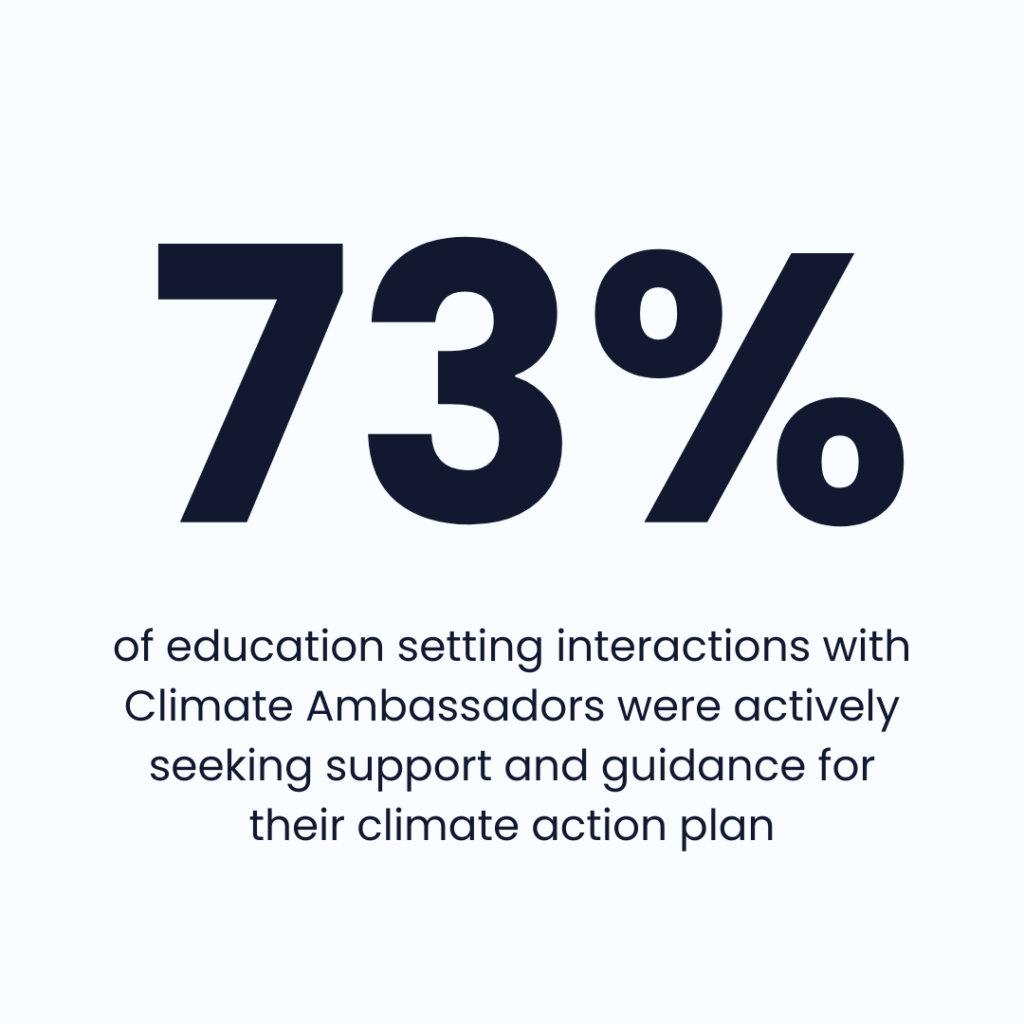
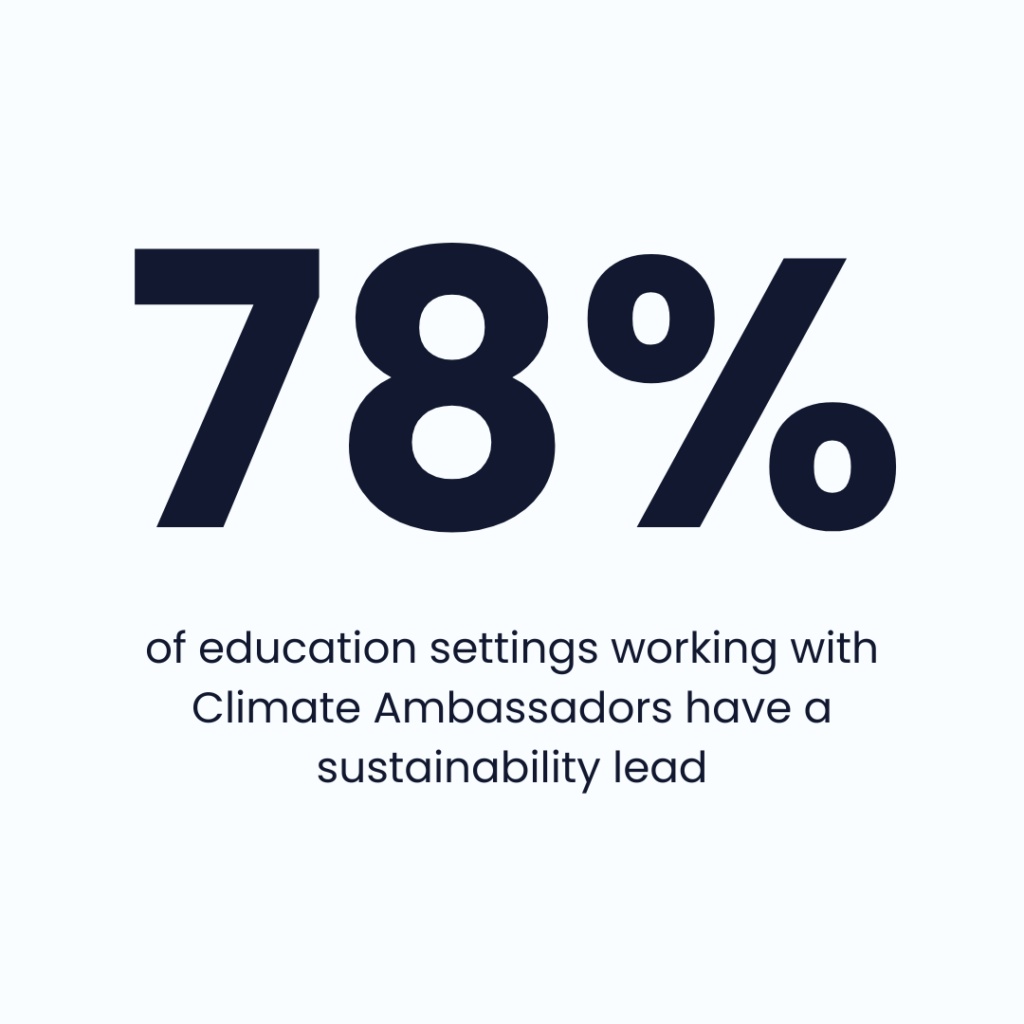
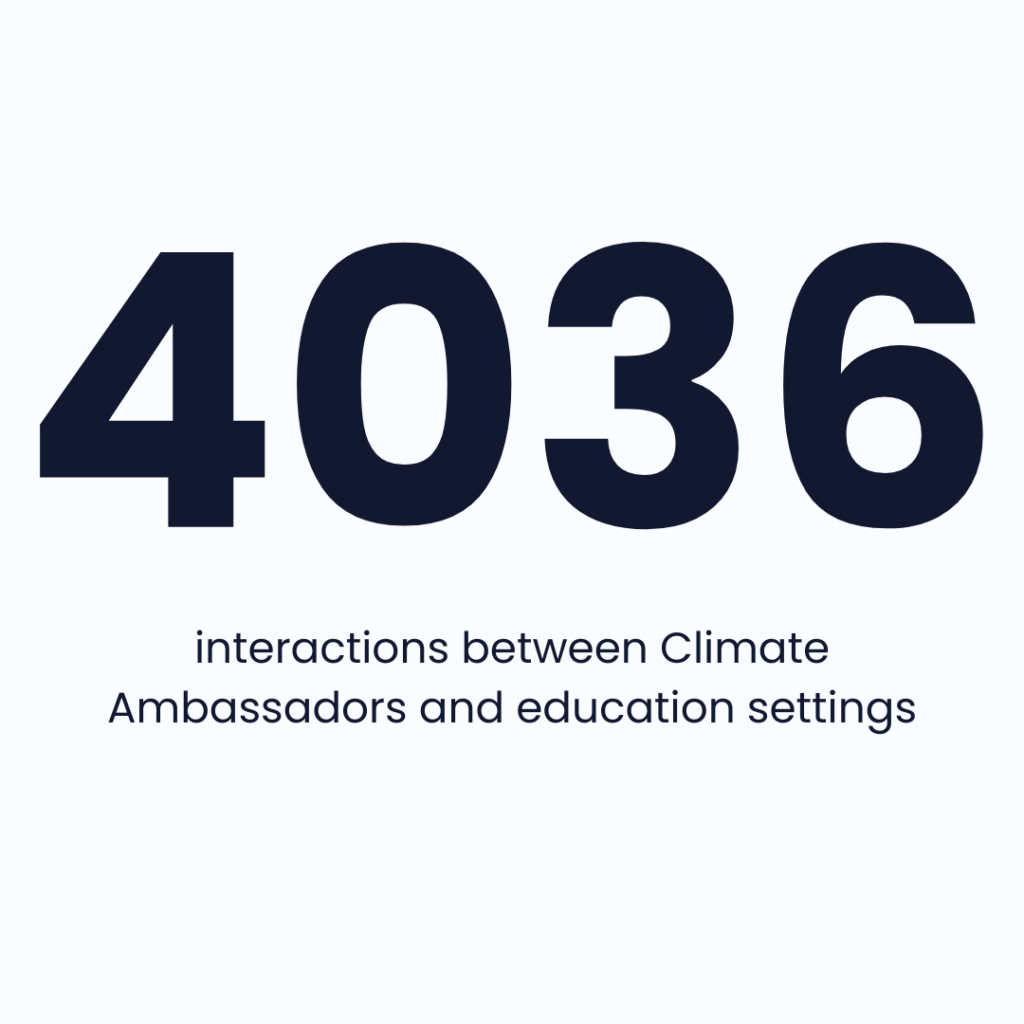
In our impact evaluation, we are considering where education settings are at on their unique climate action journeys. Settings are identified as “reach”, “engage” or “act” stages. We also evaluate and codify the individual actions settings are taking across the four climate action plan (CAP) pillars:
- Adaptation and resilience
- Biodiversity
- Climate education and green careers
- Decarbonisation
Findings show that the biodiversity pillar is the most popular, with 84% of education settings recording biodiversity pillar actions in their CAP. 56% of settings planning their climate action have actions across every pillar.
Beyond CAP development, we also look at education setting leadership and governance and education staff preparedness, to evaluate the extent to which settings are progressing on climate action with broad support and staff alignment.
Lastly, we evaluate Climate Ambassador confidence in supporting climate action across each of the pillars. 77% of Climate Ambassadors are confident in supporting actions from more than one CAP pillar.
You can find the full Phase 1 Impact Report at the bottom of the page.
Omnibus survey results
Independent survey finds majority of primary and secondary schools taking climate action
School leaders reported on their sustainability leadership as part of the October 2025 Omnibus survey. This independent survey presents an opportunity for us to evaluate wider action across the sector and progress that’s been achieved since the last survey in 2023.
The survey found that 32% of primary school leaders and 28% of secondary school leaders already have a formal climate action plan, compared to 8% and 16% respectively in March 2023.
A further 36% of primary school leaders and 31% of secondary school leaders said that they were developing one. As a result, a large majority of primary leaders (67%) and the majority of secondary leaders (59%) reported active engagement in climate action planning, compared to 41% and 44% respectively in March 2023.
Additionally, 57% of primary school leaders, 43% of secondary school leaders and 49% of special school leaders said that they had a designated sustainability lead. This has seen significant improvement from March 2023 results, when 28% of schools across phases had a sustainability lead in place.
As part of the Department for Education Sustainability Support Programme, we are delighted to see the progress happening across the education sector and the many schools leading the way in developing and maturing their climate action.